
A concrete patio should feel solid underfoot, not shift beneath a chair or collect water after every Hutto rainstorm. Homeowners often start searching after seeing widening cracks, surface flaking, or low spots where puddles remain for a day or more. Concrete Contractor Hutto can assess whether the slab has cosmetic wear or a deeper base problem. A hairline crack may wait, but pooling water, settling, and uneven edges deserve prompt attention.
Spalling, where the top layer breaks away and exposes rough aggregate, can spread as moisture enters the slab. Cracks that catch a shoe, a patio door threshold sitting above a sinking slab, or water running toward the house are not problems to postpone. Those signs can point to poor grading, an eroded sub-base, or expanding soil movement. Minor discoloration and small sealed cracks can often wait until a planned improvement, but active movement should be evaluated.
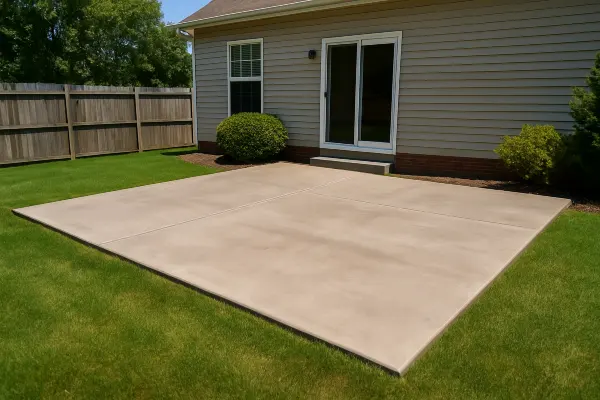
The job begins with marking the patio area, checking the slope away from the foundation, and excavating soil to make room for the base and slab. Crews grade the exposed ground, compact a crushed aggregate sub-base, and set forms along the patio perimeter. Expansion joints are placed where new concrete meets a house, porch, or existing slab. This preparation matters because concrete follows the movement of weak soil underneath it.
Learn more about our expert Driveway Installation services.
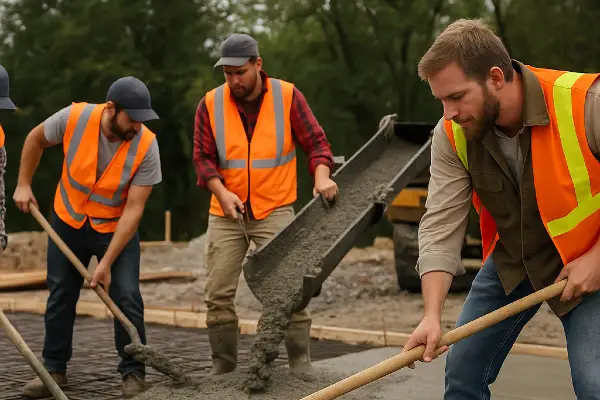
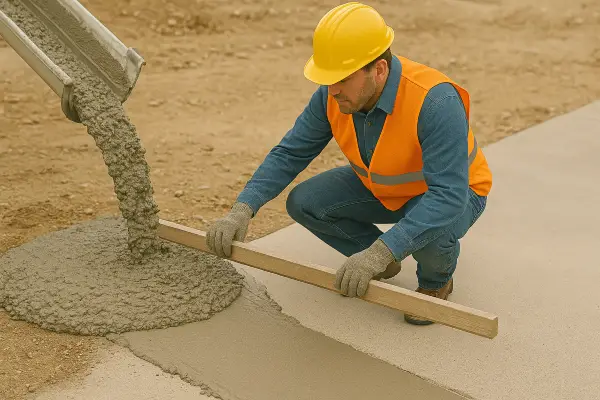
Next, rebar or welded wire mesh is positioned for reinforcement, then concrete is poured, spread, and finished to the selected texture. The crew cuts control joints while the slab is still workable or soon after placement, giving normal shrinkage cracks a planned path. Curing protects the concrete as it gains strength over several days. A sealer may be applied after curing, depending on the finish. driveway installation uses many of these same base and drainage principles.
A newer patio with isolated surface flaking may need patching, joint sealing, and a protective sealer, while an older slab with several settled panels may need removal. Access changes the plan: a fenced backyard with a narrow gate limits where a skid steer, concrete buggy, or truck can travel. Soil discovered after demolition can also alter the work, especially if loose fill, roots, or washed-out base material appears beneath the slab.
Learn more about our expert Sidewalk Replacement services.
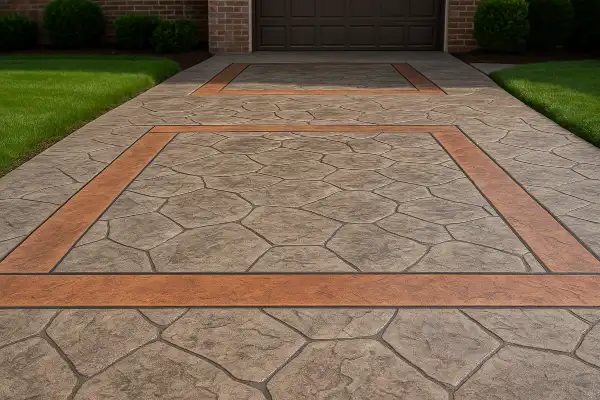
Material choices affect both appearance and upkeep. A broom-finished gray slab is practical for traction, while exposed aggregate or a decorative finish requires more careful finishing and maintenance. Hot, dry summer weather can speed moisture loss during curing, while wet conditions can delay excavation and pouring. A repair may buy roughly two more useful years from a stable slab; replacement can make more sense when the sub-base has failed and a new patio is designed for longer service. sidewalk replacement can involve similar decisions.
Ask a contractor to explain why the patio cracked or settled, not simply how they will cover the damage. A useful estimate identifies demolition, excavation depth, aggregate base, reinforcement such as rebar or mesh, concrete thickness, finishing method, control joints, and cleanup. It should also state how drainage will be handled at the house and patio edges. If a proposal does not address slope or the sub-base, compare it carefully with one that does.
Before signing, ask who will set forms, how access through the yard will be protected, and what curing steps are planned after the pour. Discuss the location of expansion joints near brick, siding, columns, and existing slabs so the new concrete has room to move. A good contractor should also explain realistic limits: concrete can develop shrinkage cracks, but joint placement, compaction, and proper finishing reduce avoidable problems rather than hiding them with a thin surface coating.
CONCRETE CONTRACTOR HUTTO
351 Exchange Blvd, Hutto, TX 78634
(512) 729-9281
info@concretecontractorhutto.com
Hours of Operation
Open 24 Hours